Foreclosures Near Me: Your Comprehensive Guide to Finding and Evaluating Distressed Properties

Searching for “foreclosures near me” is often the first step for many aspiring real estate investors or first-time homebuyers looking for a bargain. The idea of snagging a property at a significant discount is undoubtedly appealing, especially in a competitive housing market where prices seem to climb relentlessly. However, the world of distressed real estate is not quite as simple as picking a house off a list and moving in. It requires a blend of savvy research, financial readiness, and a healthy dose of patience.
In this guide, we will break down exactly what foreclosures are, how you can find them in your local area, and—most importantly—how to evaluate them so your dream investment doesn’t turn into a financial nightmare.






Understanding the Foreclosure Process
Before you start hunting for properties, it is crucial to understand that “foreclosure” isn’t a single event; it’s a legal process. It happens when a homeowner fails to make their mortgage payments, leading the lender to seize the property to recover the remaining balance of the loan. Typically, this process moves through three primary stages:
1. Pre-Foreclosure
This is the period after the lender issues a Notice of Default (NOD) but before the property is sold at auction. During this phase, the homeowner still owns the property and may be attempting a “short sale”—selling the home for less than the mortgage balance with the bank’s permission. Buying at this stage often involves direct negotiation with the owner.
2. Public Auction
If the owner cannot pay the debt or sell the home during pre-foreclosure, the property goes to a trustee sale or public auction. These are often held at the local courthouse. Auctions are fast-paced and usually require cash payments upfront. While you can find the steepest discounts here, you also face the highest risks, as you often cannot inspect the property beforehand.
3. Real Estate Owned (REO)
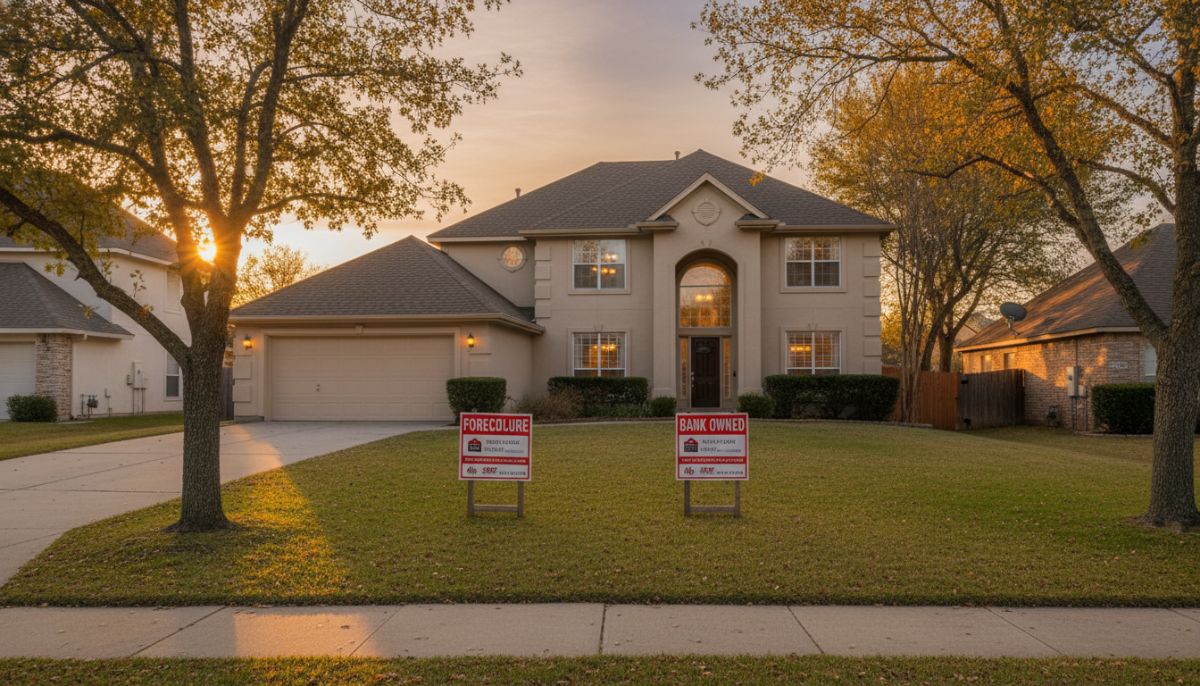
If a property doesn’t sell at auction, the lender takes ownership. These are known as REO properties or “bank-owned” homes. Banks are in the business of lending money, not managing real estate, so they are usually motivated to sell. These are generally safer than auctions because the bank clears the title and allows for traditional inspections and financing.
How to Find Foreclosures Near You
Finding a foreclosure requires looking beyond the standard listings on your favorite real estate app. While some REOs do end up on the Multiple Listing Service (MLS), many of the best deals are found elsewhere.
- Online Foreclosure Portals: Websites like Foreclosure.com, RealtyTrac, and Zillow have dedicated sections for distressed properties. These sites aggregate data from various sources, making it easy to filter by zip code.
- Bank Websites: Large financial institutions like Wells Fargo, Chase, and Bank of America maintain their own REO databases. Checking these regularly can give you a head start on properties that haven’t hit the broader market yet.
- Government Agencies: The federal government also sells foreclosed homes. Look at the HUD (Department of Housing and Urban Development) Home Store, as well as sites for VA (Veterans Affairs) and USDA-acquired properties.
- Local Courthouse Filings: For those willing to do some legwork, visiting your local county recorder’s office allows you to see the most recent Notices of Default. This puts you ahead of the digital aggregators.
- Lower Purchase Price: You can often buy below market value.
- Instant Equity: If you buy a fixer-upper and do the work yourself, you can build significant equity quickly.
- Reduced Competition: The complexities of the process scare off many casual buyers.
- High Risk: Hidden structural issues or legal liens can eat into profits.
- Lengthy Process: Dealing with banks and government agencies can involve a lot of red tape and slow communication.
- As-Is Condition: You have no recourse if you find a major problem after the sale is finalized.
Evaluating the Property: The Critical Step
Once you find a property that catches your eye, the real work begins. Evaluating a foreclosure is different from evaluating a traditional home. You aren’t just looking at the floor plan; you are looking for hidden liabilities.
Assess the Physical Condition
Foreclosed homes are almost always sold “as-is.” This means the seller (usually a bank) will not make repairs. Often, homeowners who are unable to pay their mortgage are also unable to afford routine maintenance. In some cases, disgruntled former owners may even intentionally damage the property before leaving. Budget for a professional inspection, and if you’re at an auction where that isn’t possible, always assume the worst-case scenario for repair costs.
Perform a Title Search
This is perhaps the most important step. When you buy a foreclosure, you want to make sure you aren’t also “buying” the previous owner’s debts. A title search will reveal if there are secondary mortgages, unpaid property taxes, or mechanic’s liens (claims from contractors who weren’t paid for work). In some jurisdictions, these liens stay with the property, meaning you become responsible for them once you take ownership.
Calculate the ARV (After Repair Value)
To know if a foreclosure is actually a deal, you need to calculate the After Repair Value. This involves looking at “comps” (comparable homes) in the neighborhood that are in good condition. Subtract the purchase price and your estimated repair costs from the ARV. If the remaining margin isn’t at least 15-20%, the risk might outweigh the reward.
Financing Your Purchase
How you pay for a foreclosure depends on the stage of the process. If you are buying at an auction, you usually need cash or a cashier’s check on the spot. This effectively eliminates many first-time buyers.
However, if you are buying an REO property, you can often use traditional financing like a conventional loan, FHA loan, or VA loan. If the home is in disrepair, you might look into an FHA 203(k) loan, which allows you to borrow money for both the purchase and the renovations in a single mortgage.
The Pros and Cons of Buying Foreclosures
To wrap things up, let’s look at the balance of this investment strategy.
The Pros:
The Cons:
Conclusion
Hunting for “foreclosures near me” is a journey that requires a sharp eye and a disciplined mind. While the potential for high returns is real, it is not a “get rich quick” scheme. By understanding the different stages of foreclosure, utilizing multiple search tools, and performing rigorous due diligence on every property, you can minimize your risks and find a property that serves as a solid foundation for your financial future. Remember, in the world of distressed real estate, the best deal isn’t always the cheapest one—it’s the one that offers the most clarity and potential for growth.