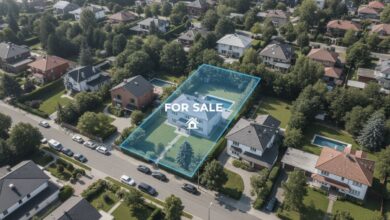
Navigating the World of Commercial Real Estate
Entering the commercial real estate (CRE) market is often seen as a significant milestone for any investor or business owner. Unlike residential real estate, which is frequently driven by emotion and personal preference, commercial property is a world governed by spreadsheets, yields, and strategic utility. Whether you are looking for a sleek office space in the city center, a sprawling industrial warehouse, or a vibrant retail storefront, finding the right commercial property for sale requires a blend of sharp financial intuition and thorough due diligence.
In this guide, we will break down the essential components of buying commercial property, offering a roadmap to help you navigate the complexities of the market while keeping the tone professional yet accessible. After all, high-stakes investing doesn’t have to be stiff and boring.






Why Buy Instead of Lease?
Before diving into the ‘how,’ it is important to address the ‘why.’ Many businesses start by leasing, but there comes a point where purchasing becomes the more viable long-term strategy. Buying a commercial property allows you to build equity, benefit from potential property appreciation, and enjoy significant tax advantages such as depreciation and interest deductions. Furthermore, as an owner, you have complete control over the space—no more negotiating with a landlord every time you want to repaint the lobby or upgrade the HVAC system.
From an investment perspective, commercial properties often offer higher income potential than residential rentals. With longer lease terms (often five to ten years) and tenants who are generally professional entities, the stability and cash flow can be much more predictable.
Understanding the Different Asset Classes
Commercial real estate is not a monolith. It is divided into several sectors, each with its own risk profile and management requirements:
1. Office Space: Ranging from skyscrapers to small professional buildings. This sector is currently evolving as remote work trends shift how companies utilize space.
2. Retail: Includes everything from neighborhood strip malls to massive regional shopping centers. Location and foot traffic are the ultimate deciders here.
3. Industrial: Think warehouses, distribution centers, and manufacturing plants. With the rise of e-commerce, this has become one of the most sought-after asset classes.
4. Multifamily: Large apartment complexes with five or more units are categorized as commercial. These are often seen as ‘recession-proof’ because people always need a place to live.
5. Special Purpose: This includes hotels, healthcare facilities, and self-storage units.
The Financial Metrics That Matter
When looking at a commercial property for sale, you need to look past the architecture and focus on the numbers. Professionals use specific metrics to determine if a deal is worth the paper it’s written on:
Net Operating Income (NOI)
NOI is the heartbeat of a commercial investment. It is calculated by taking all revenue from the property (rent, parking fees, laundry) and subtracting all necessary operating expenses (property taxes, insurance, maintenance). It does not include mortgage payments or taxes.
Capitalization Rate (Cap Rate)
The Cap Rate is the ratio of NOI to the property’s purchase price. For example, if a building generates $100,000 in NOI and costs $1,000,000, the Cap Rate is 10%. This allows you to compare different properties at a glance. A ‘good’ Cap Rate depends heavily on the location and the risk level of the asset.
Cash-on-Cash Return
This measures the annual return you made on the property in relation to the amount of actual cash you invested (your down payment and closing costs). It is a more realistic look at your personal wallet’s growth.

The Importance of Due Diligence
One of the most critical stages of buying commercial property is the due diligence period. This is your ‘safety net’ time to uncover any skeletons in the closet. Unlike residential transactions, commercial due diligence is intensive and often takes 30 to 90 days. You should investigate:
- Zoning and Land Use: Is the property actually zoned for your intended use? Can you expand the building in the future?
- Environmental Reports (Phase I ESA): You don’t want to buy a property only to find out the soil is contaminated from a dry cleaner that sat there thirty years ago. The cleanup costs could bankrupt you.
- ALTA Survey: This confirms property boundaries, easements, and encroachments.
- Structural and Mechanical Inspections: Commercial roofs and HVAC systems are incredibly expensive. Knowing their remaining lifespan is non-negotiable.
- Tenant Review: If the property is occupied, you must review the leases. Are the tenants paying on time? When do their leases expire? Are there ‘estoppel certificates’ signed by tenants to confirm the lease terms?
- Commercial Real Estate Broker: They have access to off-market deals and understand local market trends.
- Real Estate Attorney: To handle the complex contracts and title work.
- Certified Public Accountant (CPA): To ensure you are maximizing tax benefits and structuring the purchase correctly.
- Commercial Inspector: To vet the physical integrity of the asset.
Financing Your Purchase
Commercial loans differ significantly from residential mortgages. You generally cannot walk into a bank and get a 30-year fixed-rate loan for a warehouse. Most commercial loans have shorter terms (5 to 10 years) with a ‘balloon payment’ at the end, and they are amortized over 20 or 25 years.
Lenders will look closely at the Debt Service Coverage Ratio (DSCR), which measures the property’s ability to cover its own debt. If the property doesn’t generate enough income to pay the mortgage and still have a buffer, the bank likely won’t fund it. You should also explore SBA (Small Business Administration) loans, particularly the 504 loan program, which offers excellent rates for business owners who plan to occupy at least 51% of the property.
Location vs. Emerging Markets
We’ve all heard the mantra ‘location, location, location,’ but in commercial real estate, it’s about ‘relevance.’ A retail shop in a busy downtown area is great, but an industrial warehouse near a major highway interchange might be even more valuable.
Keep an eye on emerging markets. Is the local government investing in new infrastructure? Are major tech companies moving into a specific suburb? Buying on the path of progress is often more profitable than buying in an already saturated, high-priced district.
Working With the Right Team
You shouldn’t go into this alone. A successful commercial purchase usually involves a ‘dream team’ consisting of:
Final Thoughts
Buying a commercial property is a marathon, not a sprint. It requires patience, a meticulous eye for detail, and a stomach for occasional market fluctuations. However, for those who do their homework, it is one of the most rewarding ways to build wealth and secure a legacy. By focusing on strong cash flows, performing rigorous due diligence, and choosing the right location, you can turn a ‘For Sale’ sign into a cornerstone of your financial future.
Happy hunting, and may your cap rates always be in your favor!